Using your knowledge of the nature of phospholipids, explain what you think would happen if phospholipids are mixed with water. If you are having trouble visualising this, think about what happens when oil is added to water. Can you suggest a physiological process where this might be important?
A phospholipid molecule has a phosphate head that is attracted to water (hydrophilic) and two lipid tails that are hydrophobic. When phospholipids are added to water they arrange themselves into phospholipid bilayers into 'balls' called micelles, into liposomes
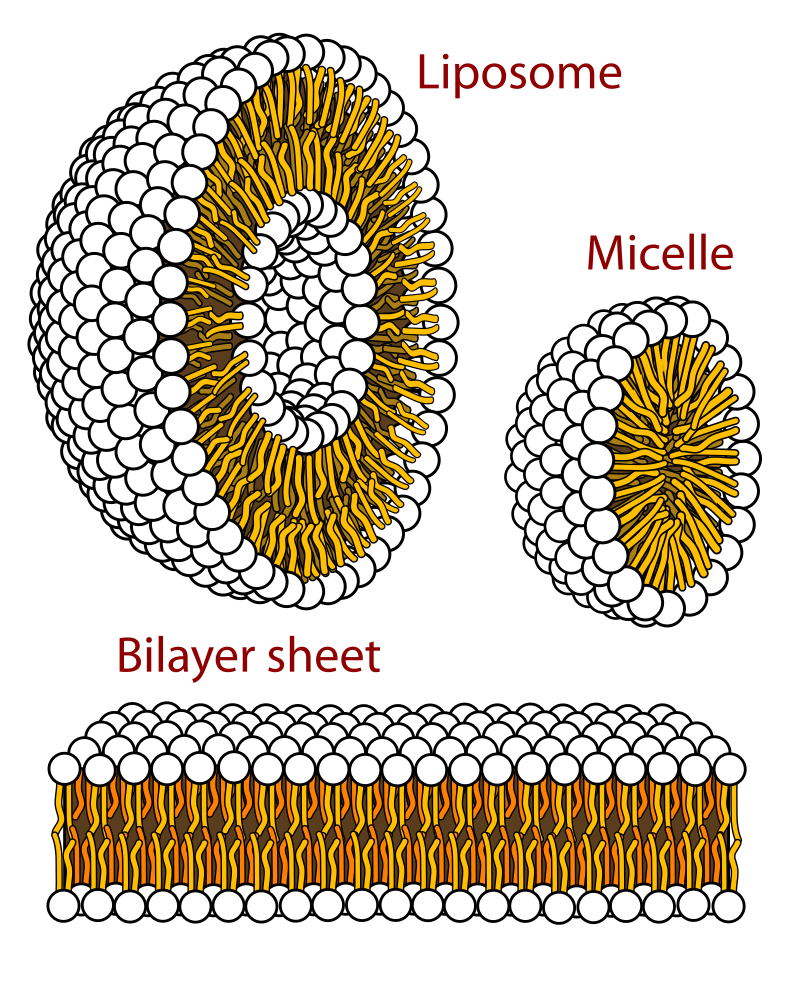 Micelles are formed in the small intestine as fats in our diet are digested. They move through the watery intestinal contents and come in contact with the cells lining the intestine. They can then be absorbed into the cells by simple diffusion.
Liposomes are carriers for targeted drug delivery. They help to obstacles to cellular and tissue uptake of drugs.
Steps involved in liposome action of drug delivery:
1. Adsorption: Adsorption of liposomes to cell membranes causes its contact on the cell membrane.
2. Endocytosis: Adsorption of liposomes on the cell surface membrane followed by engulfment and internalization into the liposomes
3. Fusion: fusion of lipid bilayers of liposomes with the lipoidal cell membrane by lateral diffusion and intermingling of lipids results in direct delivery of liposomal contents in the cytoplasm.
4. Lipid exchange: Due to the similarity of liposomal lipid membrane with cell membrane phospholipids, lipid transfer proteins in the cell membrane easily recognize liposomes and cause lipid exchange.
For example, in case of cancer cells; they consume large amounts of fats to fill the requirement of rapid growth, they recognize the liposomes (loaded with anti-cancer drug) as a potential source of nutrition. When they are targeted by liposome, they get absorbed. Once the anti-cancer drugs are released from the liposome into the site, cancer cells are killed by the drug.